
Lobotomy as a Service

The true status of Large Language Models (as opposed to physically embedded AI [NOTE] ) is very different from the relentless corporate narrative about their “inevitability”. LLMs and the infrastructure to run them are broken in very many ways, but people have trouble penetrating the ever-shifting bullshit about their capabilities, their affordability, and the economic and social impact of the massive data center buildout.
One of the main canards of AI bullshit is selling the direction of motion, no matter how small its magnitude, as evidence the goal of AGI will be reached and utopia will ensue. This canard has been around since the dawn of AI. And so has its rebuttal: You can’t get to the moon by climbing a tree
Feigenbaum and Feldman (1970s AI researchers) claim that tangible progress is indeed being made, and they define progress very carefully as “displacement toward the ultimate goal.” According to this definition, the first man to climb a tree could claim tangible progress toward reaching the moon.
- Hubert Dreyfus, What Computers Can’t Do: A Critique of Artificial Reason (1972)
An introduction to LLM Failures and side effects
If AI proponents are going to claim incremental improvements or repairs as evidence of eventual success, then it is fair to present the copious failures and side effects of LLMs as evidence of the ongoing failure of LLMs to be “intelligent” or even a net positive.
With so many problems to cover, i have to prioritize them based on their impact.
I will begin with LLM’s biggest impact: deskilling skilled workers and damaging the education of the upcoming generation. Then we can move on to the theoretical and practical limitations of LLM as a technology. Most importantly, it is vital to destroy the myth that LLMs are “intelligent” and have “agency”.
With the veil of LLM virtue pierced, we can move on to why our masters have decided to bet the entire supply of Western capital on an ridiculously expensive (even though hidden until now) product with no “moat”. The next domino in the chain is the water and energy sucking buildout of data centers and their accompanying noise pollution and heat island effects. These negative impacts have rapidly generated bipartisan, populist political pushback,
Finally, given all the problems we just reviewed, one must ask if there is some hidden motivation to lock this technology onto society before society wakes up to what is happening - i.e. a digital panopticon/gulag.
Deskilling
The following stories are not from fringe publications. They are from mainstream sources, including LLM companies and major university AI labs. These five items deal with effects on professionals and businesses.
1 Doctors deskilled
In Is AI ruining our skills? Early results are in — and they’re not good, the journal Nature reports that doctors and computer programmers who use LLMs become dependent on them and perform worse without them.
Once physicians began using it, their performance dropped significantly whenever the system was unavailable. During the three-month period before the AI tool was introduced, the specialists found at least one adenoma during 28.4% of colonoscopies. During the three-month period after the tool was introduced, the adenoma detection rate for colonoscopies performed without AI assistance decreased to 22.4%.
The findings...suggest that even highly skilled professionals might get worse at tasks that their job requires as they become more dependent on AI tools...The study authors say that continuous exposure to such tools can cause clinicians to become “less motivated, less focused, and less responsible when making cognitive decisions without AI assistance”.
“There is no established solution against deskilling right now.
2 Computer professionals deskilled
A paper from the LLM firm Anthropic How AI Impacts Skill Formation admits that AI hurts skill formation.
We find that AI use impairs conceptual understanding, code reading, and debugging abilities, without delivering significant efficiency gains on average...Our findings suggest that AI-enhanced productivity is not a shortcut to competence and AI assistance should be carefully adopted into workflows to preserve skill formation – particularly in safety-critical domains.
There are many papers along these lines. One of them coins the useful terminology of “epistemological debt”:
This paper introduces “Epistemological Debt”—the hidden carrying cost incurred when engineers substitute logical derivation with passive AI verification. This debt erodes the mental models essential for root-cause analysis, widening the gap between system complexity and human comprehension. Furthermore, recursive training on synthetic code threatens to homogenize the global software reservoir, diminishing the variance required for robust engineering...this research illustrates how “mechanized convergence” leads to systemic fragility.
- F. Ginac, Cognitive Atrophy and Systemic Collapse in AI-Dependent Software Engineering
3. LLM failure causes human quality experts to be rehired
In Ford Has Been Rehiring Quality Inspectors After AI Fell Short , Ford admits that using LLMs for quality control resulted in poorer quality. And, they were forced to rehire quality engineers they had replaced with LLMs.
“We had been relying more and more on automated quality systems” and not getting the desired results, Galhotra said. “We brought back technical specialists” and “they hunt for failure points before a part ever reaches the plant floor.”
The return of the veteran engineers at Ford cuts against the prevailing wisdom — and fear — that AI will replace all kinds of knowledge workers. But Ford found the machines couldn’t replace experience.
“Mistakenly we thought that by just introducing artificial intelligence and ingesting the design requirements that we had, that that would produce a high-quality product,” Poon said. But “we recognized that for us to enhance some of our automation and machine learning and artificial intelligence tools we needed to ensure that they were trained by the most experienced individuals.”
4 AI slop is burning out the referees of scientific papers
In February, Nature reported that AI slop is overwhelming the people who referee papers for technical and scientific journals.
Computer science is the first field to face the deluge of slop — because research happens in silico and is done by researchers with AI expertise. But with the rise of AI, similar challenges are likely to arise in other fields, including wet-lab-based disciplines, says Lee, “although they may manifest in somewhat different ways”.
Kevin Weil, vice-president of science at OpenAI compared the problem of weeding out low-quality AI-made content with that of spam filtering for e-mails.
5 AI Slop is ruining organizations
The Harvard Business Review warns business about the dangers of Generative AI:
Generative AI’s gifts come with a hidden danger: decay in the accuracy and quality of organizational knowledge. This decay is the organization-level version of the “workslop”. When workslop occurs in sequence across a business’s processes, those processes themselves—and their outputs—start to deteriorate, errors compound and pile up, trust erodes, and the productivity gains of AI disappear.
The problems that arise with generative AI are not confined to one sector or type of AI application. Organizations face three common challenges: The first challenge is verifying that content is correct...The second challenge is validating how and where humans have added value...The third challenge is entropy—the gradual decline of systems into disorder. As knowledge is increasingly passed through AI, it moves further away from the original content used to create it.
For example, we spoke to a healthcare provider who receives long legal documents from insurance firms. They know these are generated with AI. And because they are sent in large numbers, they are being reviewed by AI as human review is cost-prohibitive. What ensues is a risky AI-based game of telephone, as the information with each cycle will increasingly depart from the underlying ground truth knowledge.
- Harvard Business Review, Don’t Let AI Slop Muck Up Your Company’s Processes
----
Dumbing Down
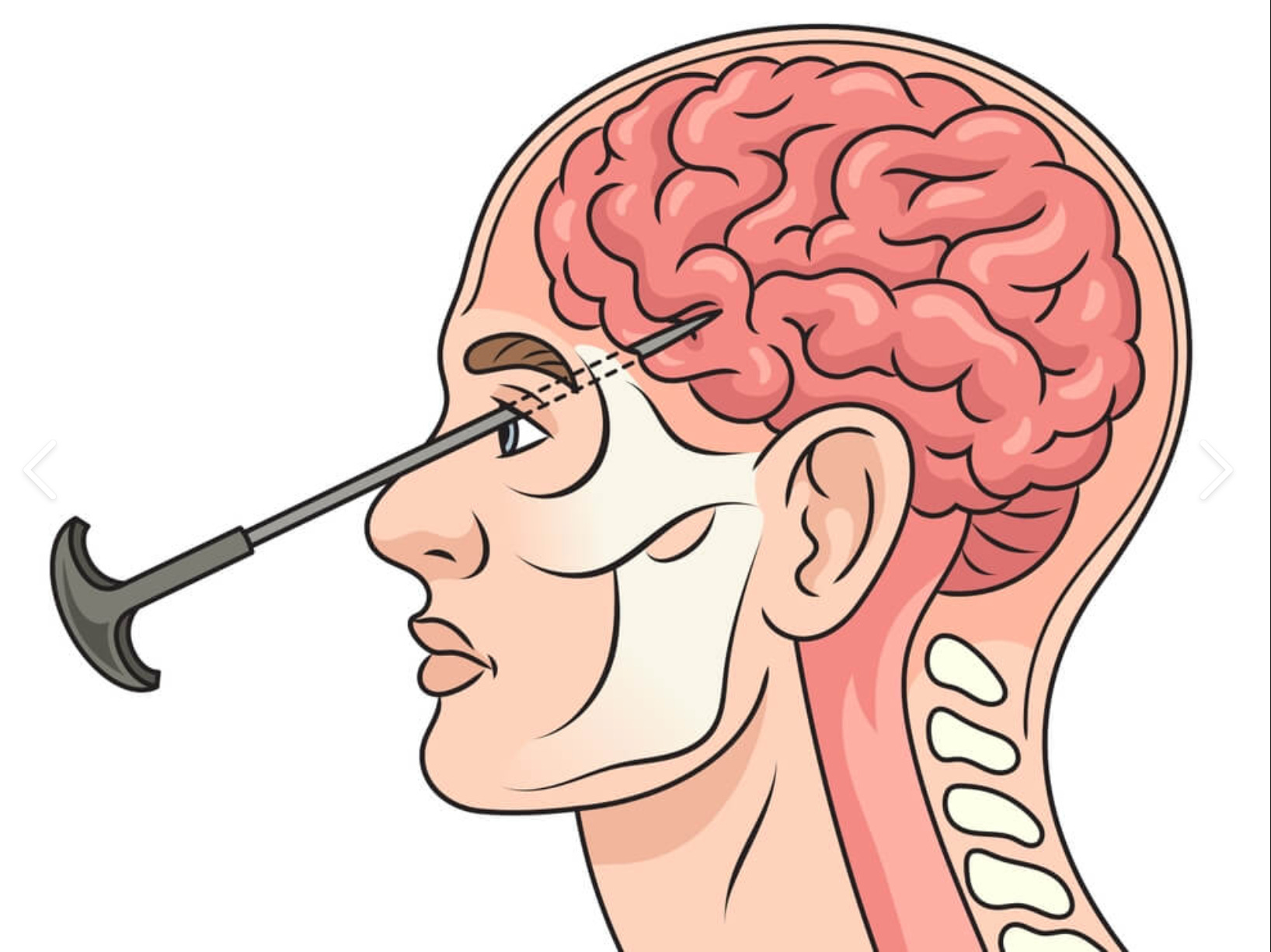
Moving beyond workplace side effects, the entire society is being lobotomized. The following four items deal with effects on society at large.
1. Use of LLMs is ruining creativity
The loss of creativity is a direct outcome of semantic ablation (SA), a basic property of LLMs. SA will be discussed at length in the technology failure section.
The bigger and more alarming impact they have is to constrict our full range of thoughts and our ability to generate original and useful ideas — what we call creative thinking. This seems to be especially true for students. A.I.’s smooth sentences, elegant transitions and rich vocabulary give the illusion of expansive creativity and individuality. But the underlying ideas often converge into a few homogenized categories.
The erosion of creative thinking means young people will struggle to navigate uncertainty. Workers will strain to adapt to a shifting labor market. And society will miss out on the new ideas that can solve complex problems and enhance lives.
A.I. has the largest homogenizing impact on students who are farthest from the mean and have unique perspectives
- New York Times, What 370,000 College Essays Tell Us About A.I.’s Effects on Creativity
2. College students are becoming incapable of reading
Why are college students using LLMs to write? Because they don’t know how to read in depth any longer.
A story in the Chronicles of Higher Education reports that college students increasingly cannot read for comprehension. They cannot handle long texts, but only short passages.
students who once handled 30 pages of reading per class meeting now seem “intimidated by anything over 10 pages and seem to walk away from readings of as little as 20 pages with no real understanding.” Crucially, he added that this is “not a matter of laziness on the part of the students” but of underlying skills they were never given a chance to build.
The Chronicle of Higher Education’s 2024 investigation found the same pattern across institutions as different as the Stevens Institute of Technology and Wellesley College, where the average SAT exceeds 1400. Nicholaus Gutierrez, an assistant professor at Wellesley, told The Chronicle that the baseline for what students consider a reasonable amount of work has dropped so noticeably that he has cut his readings accordingly; a 750-word essay now strikes many students as long.
- Tyler Jagt, My Students Can’t Read
3. Chatbots have devalued writing
Writing well, once a mark of skill, has become, for a growing number of readers, reviewers and hiring managers, a source of moral suspicion. The skills we once used to signal intelligence and effort – clarity, precision, a well-turned sentence – are starting to lose their meaning.
The problem lies in our inability to easily detect AI-written content,...As a result, many universities that had been using plagiarism-detection tools for AI detection have stopped due to concerns about their reliability.
What seems certain, however, is that the old traces of authenticity and authorship have become harder to define and locate – and even where they exist, they arrive shadowed by suspicion.
- New Scientist, How human error became a weapon against large language models
4. Sycophantic chatbots cause users to become delusional
Then there is the headline grabbing phenomenon of chatBot-induced delusional thinking. An MIT CSAIL (Computer Science and Artificial Intelligence Lab) paper Sycophantic Chatbots Cause Delusional Spiraling, Even in Ideal Bayesians This paper demonstrated that sycophantic behavior can make people delusional
We then show that in this model, even an idealized Bayes-rational user is vulnerable to delusional spiraling, and that sycophancy plays a causal role. Furthermore, this effect persists in the face of two candidate mitigations: preventing chatbots from hallucinating false claims,
---------------------
Intermission
There is already a lot of material to digest in this first section. Given that there will be at least six more sections, I am going stop here.
The next section will discuss the technical weaknesses of LLMs that lead to their widely observed failures. Most saliently, they promote a lowest common denominator of “knowledge”. That is, the output of LLMs is the most frequently occurring data in the training set - the most banal, mediocre, and non-controversial sentiments.
Stay tuned.
[NOTE]
The framing reflects a deeper conceptual error now common in Western discourse: the conflation of “AI” with large language models. China’s advantage is not that it is using machines to write reports or generate prose, but that it is deploying sensing, control systems, robotics, and machine vision across entire production ecosystems. This is AI as physical capability, not narrative simulation. By controlling the full manufacturing stack – from components to systems integration – China is compounding its lead, while much Western tech culture seems preoccupied with imagining an omniscient “god in a box” that talks impressively but touches little.